
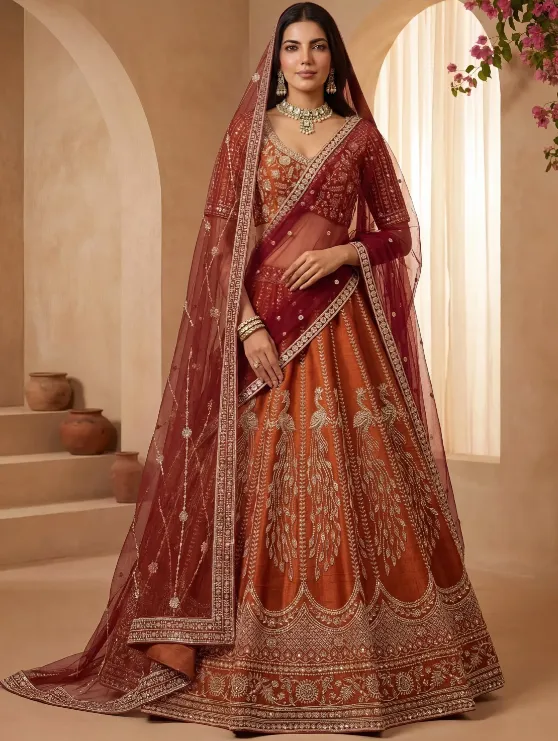
A bride may spend weeks comparing colours and embroidery, but the best outfit decision goes beyond appearance. A bridal lehenga also needs to work through long ceremonies, photographs, greetings, movement, and hours of celebration.
That makes bridal shopping a practical planning exercise as much as a style choice. Fit, weight, draping, footwear, jewellery, and even the wedding schedule can affect how comfortable and polished the final look feels.
Begin With the Wedding-Day Timeline
Think about what the outfit must handle from the moment you get ready until the last major ritual. Venue conditions matter too. Outdoor weddings can involve uneven surfaces and changing weather, while indoor celebrations may allow longer trains, heavier fabrics, or more elaborate layering.
Before finalising a design, note:
-
Ceremony duration and sitting requirements
-
Indoor or outdoor venue conditions
-
Amount of walking between spaces
-
Whether dancing is part of the schedule
-
Expected weather and temperature
This helps narrow down styles that look beautiful and remain manageable.
Decide Where You Want the Visual Focus
A bridal outfit has several possible focal points: the skirt, blouse, dupatta, neckline, waist, or jewellery. Trying to make every area equally elaborate can make the complete look feel visually crowded.
If the skirt carries dense embroidery, a slightly quieter blouse can create balance. If the blouse has strong neckline or sleeve work, the jewellery can be chosen around it rather than competing with it.
Test Weight Before Falling in Love With Detail
Heavy embroidery can look spectacular, but weight is easy to underestimate during a short trial. Walk around, sit down, turn, and spend several minutes wearing the skirt before making a decision.
Pay attention to the waistband and how the fabric falls when seated. If the lehenga pulls heavily at the waist or feels difficult to lift while walking, it may become tiring during a long ceremony.
Useful comfort checks include:
-
Secure but non-restrictive waistband
-
Smooth inner lining
-
Comfortable blouse armholes
-
Embellishments that do not scratch
-
A skirt length suited to the chosen footwear
Judge Heavy Work by Placement, Not Quantity
A Heavy Bridal Lehenga Choli does not need dense decoration across every inch to create a grand appearance. Strategic embroidery around the hem, panels, neckline, sleeves, or dupatta border can produce strong visual impact while giving the design some breathing space.
Placement also affects comfort. Heavy work concentrated low on the skirt may influence movement, while a very embellished blouse can feel restrictive if the backing or lining is stiff.
Look closely at how the embroidery supports the silhouette rather than judging richness only by how much embellishment is present.
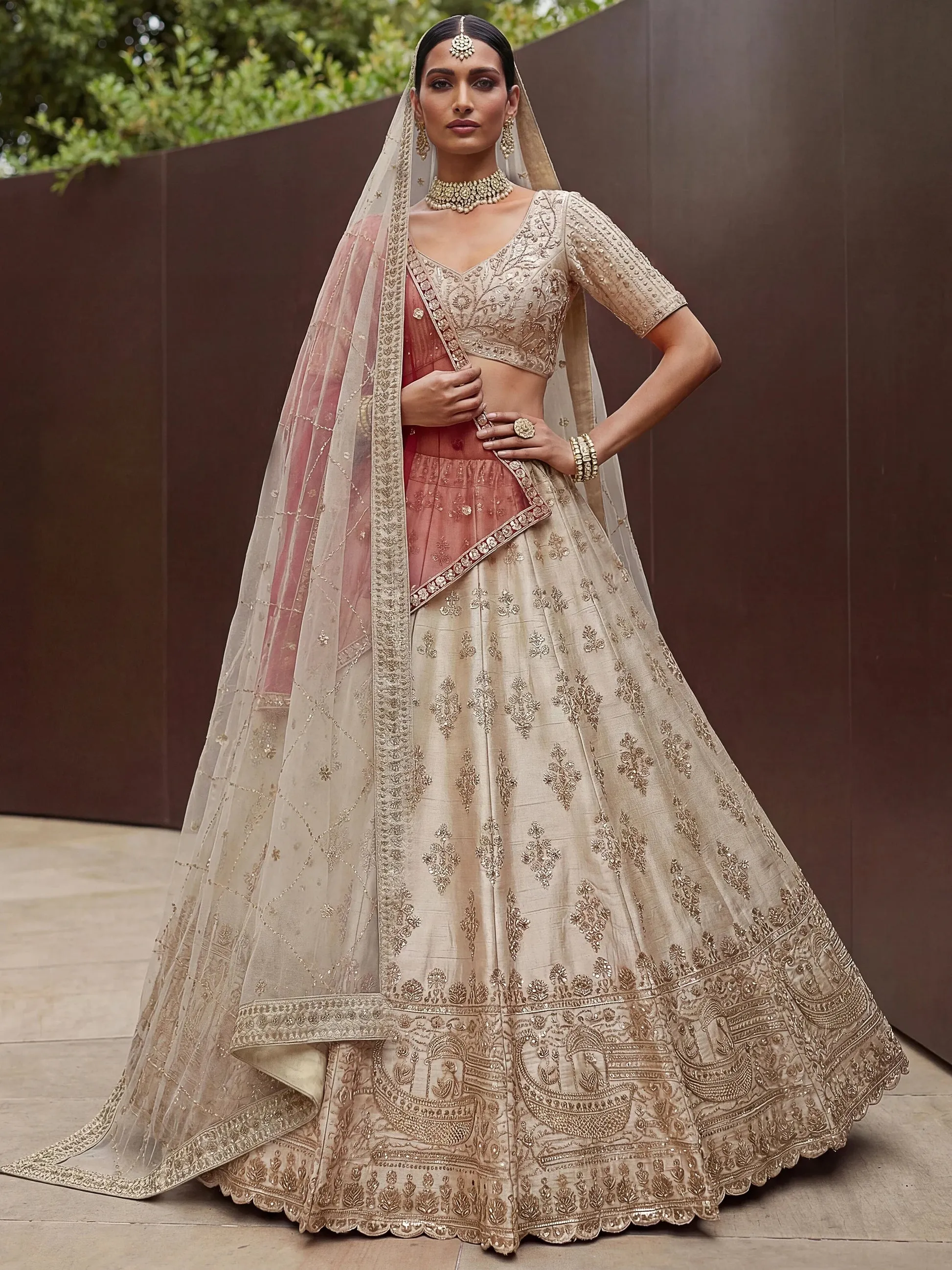
Plan the Dupatta as Part of the Outfit
The dupatta should not be treated as a last-minute accessory. Its fabric, border, and draping style can change the balance of the entire look.
Some brides prefer one dupatta secured over the head, while others use a second, lighter drape across the shoulder. Whatever the style, test it with the actual hairstyle and jewellery.
Pins should feel secure without pulling the fabric, especially when the dupatta is heavy.
Coordinate Jewellery After the Blouse Is Final
Buying jewellery too early can create problems if the final neckline differs from what was planned. Once the blouse shape is fixed, it becomes easier to decide whether a choker, longer necklace, layered combination, or statement earrings will work best.
A few useful pairings are:
-
Deep neckline with a structured necklace
-
High neckline with statement earrings
-
Detailed sleeves with restrained bangles
-
Heavy dupatta border with simpler head jewellery
-
Elaborate blouse with one dominant necklace rather than several competing pieces
The jewellery should complete the bridal look, not hide the garment.
Schedule One Full-Dress Trial
A final trial should reproduce the wedding look as closely as possible. Wear the lehenga with the intended footwear, blouse, dupatta, jewellery, and relevant undergarments.
Walk, sit, climb a few steps, and test the dupatta placement. Check whether the necklace catches on embroidery or whether the footwear changes the hem length.
This rehearsal gives enough time to make small alterations and reduces last-minute surprises.
Final Thoughts
A memorable bridal outfit is created through more than colour and ornamentation. The most successful choices consider the wedding schedule, movement, comfort, embroidery placement, accessories, and draping as one complete system.
Planning these details early allows the bride to focus less on adjusting her clothes and more on experiencing the celebration. When beauty and practicality are treated as equally important, the final look can feel grand, personal, and comfortable throughout the wedding day.